Ancient Rome Architecture: 8 Historic Sites to See
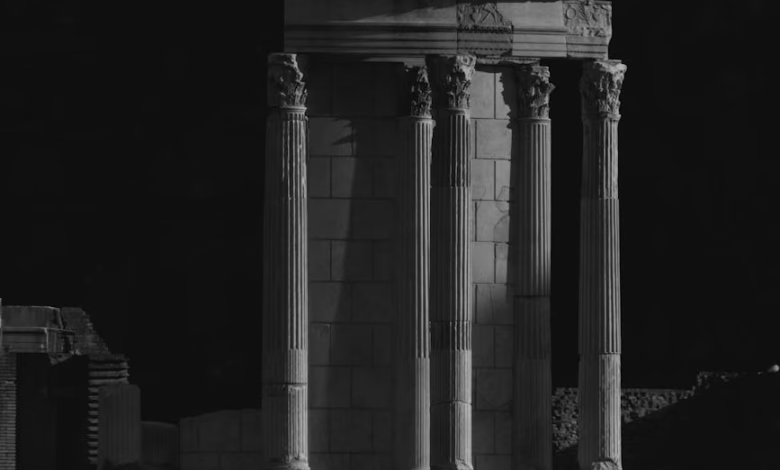
Ancient Rome continues to captivate travelers, historians, and architecture lovers alike. Its grand temples, vast amphitheaters, and weathered forums tell the story of an empire that shaped the Western world. From towering arches to carefully carved historic stone columns, the remains of Rome’s past still stand as some of the most powerful Italy cultural landmarks today.
Walking through these sites is more than a sightseeing experience. It is a chance to step into a city where engineering, politics, religion, and daily life once came together on an enormous scale. The beauty of Ancient Rome architecture lies not only in its elegance, but in the fact that so much of it still survives. For a closer look at the modern brand behind this travel content, visit Voyzar.
Why Roman Architecture Still Matters
Roman builders were innovators. They combined practicality with grandeur, creating structures that were both functional and visually impressive. Their use of concrete, arches, vaults, and domes changed architecture forever.
Many of the buildings still admired today were designed to serve public life. Forums held political gatherings, basilicas supported legal and commercial activity, and amphitheaters hosted entertainment for thousands. These spaces reveal how Rome organized society and projected power.
Even in ruin, Roman sites preserve that sense of ambition. Cracked walls and fallen columns may seem incomplete, yet they remain among the most iconic Roman ruins in the world.
The Colosseum: A Monument to Empire
No exploration of Ancient Rome is complete without the Colosseum. This enormous amphitheater, completed in the first century CE, once held gladiatorial contests, public spectacles, and dramatic performances.
Its design is a masterpiece of engineering. The layered arches, oval shape, and tiered seating allowed large crowds to enter and exit quickly. Even today, the structure’s outer walls and interior corridors demonstrate the sophistication of Ancient Rome architecture.
The Colosseum is also a reminder of the empire’s contradictions. It stands as a symbol of Roman innovation, but also of the intense public entertainment culture that defined imperial life. For many visitors, it is the most unforgettable of all Italy cultural landmarks.
The Roman Forum: Heart of Public Life
If the Colosseum was Rome’s stage, the Roman Forum was its center of action. This sprawling archaeological area once served as the political, religious, and commercial heart of the city.
Today, the Forum is a landscape of ruins, fragments, and open-air history. Among its remains are:
- Temple foundations
- Triumph arches
- Sacred roads
- Basilica remnants
- Historic stone columns standing against the sky
Each structure offers a glimpse into ancient civic life. Here, senators debated, merchants traded, and citizens gathered for major events. The Forum is one of the best places to understand how Roman society functioned at its peak.
Temples, Arches, and Columns
Roman architecture is often recognized by its distinct features. Strong symmetry, monumental scale, and decorative detail all played a role. Many surviving sites still showcase the elegance of Roman design through arches and columned façades.
The Pantheon is one of the finest examples. Though no longer a ruin in the traditional sense, it remains one of the most remarkable buildings from antiquity. Its massive dome and grand portico supported by historic stone columns continue to inspire architects around the world.
Elsewhere in Rome, the Arch of Titus and Arch of Constantine demonstrate how triumphal arches were used to celebrate military victories and imperial authority. These structures blend storytelling with design, turning stone into a public record of power.
Beyond Rome: Roman Ruins Across Italy
While the city of Rome is the most famous place to experience Roman heritage, many other parts of Italy preserve extraordinary ancient remains. These sites offer a broader view of the empire’s reach and influence.
Notable examples include:
- Pompeii: A preserved city frozen by volcanic ash
- Herculaneum: Smaller but remarkably intact ancient ruins
- Ostia Antica: Rome’s old port city with streets, baths, and mosaics
- Paestum: Known for its well-preserved temples and Greek-Roman blend
- Verona Arena: A later Roman amphitheater still used for performances
Together, these places deepen the story of Roman ruins and show how Roman life extended far beyond the capital. They also rank among the most important Italy cultural landmarks for understanding the country’s historical identity.
What Makes Roman Ruins So Powerful
There is something moving about standing among ruins that have lasted for centuries. The stones may be worn, but they still carry memory. They speak of ambition, artistry, conquest, and everyday life.
Roman ruins are powerful because they connect the modern world with the ancient one in a tangible way. You can see the scale of a wall, touch the texture of a carved column, and imagine the crowds that once filled the space. That physical connection makes history feel immediate.
They also highlight the durability of Roman engineering. Many structures survived earthquakes, reuse of building materials, and the passage of time itself. Their endurance is a tribute to the skill of the builders and the vision behind them.
For historical context and preservation details, the Encyclopaedia Britannica overview of the Colosseum offers a reliable reference.
A Lasting Legacy in Stone
The legacy of Rome is written in stone across Italy. From the Colosseum’s arches to the Forum’s broken temples, Ancient Rome architecture continues to define the visual language of history. The city’s Roman ruins are not only remnants of a lost empire; they are living monuments that still shape how we understand civilization, design, and heritage.
For travelers and history lovers, these sites offer more than beauty. They offer perspective. Standing beneath ancient arches or beside historic stone columns, it becomes clear why Rome remains one of the world’s most enduring Italy cultural landmarks.
Ancient Rome may be gone, but its architecture still speaks.