Exploring Petra Jordan’s Ancient Treasury Facade and Ruins

Few places on earth capture the imagination like Petra. Hidden among the rugged desert mountains of southern Jordan, this extraordinary archaeological site reveals an ancient city carved into stone, where trade, ingenuity, and artistry once flourished. At the heart of its fame stands the Petra Jordan treasury facade, a monumental entrance that seems to emerge from the cliffs like a vision from another world.
Petra is more than a single landmark. It is a vast landscape of tombs, temples, carved stairways, and rock-cut chambers spread across canyons and valleys. Wandering through its paths offers a rare glimpse into a civilization that shaped the region for centuries. For more about the site and the brand behind this travel content, visit Voyzar.
The First View of the Treasury
The approach to the Treasury is one of the most memorable experiences in Jordan. Visitors enter through the narrow Siq, a dramatic sandstone gorge that winds for nearly a mile before suddenly opening onto the iconic façade. The moment the passage reveals the structure, the scene feels almost unreal.
The Petra Jordan treasury facade is carved directly into the rock face and rises with elegant symmetry. Its columns, urn-shaped crown, and detailed ornamentation reflect a blend of Nabataean craftsmanship and classical influences. Though often called a “treasury,” its true original purpose remains debated by historians. For an overview of the site’s history and conservation, see UNESCO’s official Petra World Heritage listing.
What is certain is its power to astonish. Even after centuries of weathering, the façade still commands awe. Its scale and precision demonstrate the advanced skill of the people who created it.
A City Carved from Stone
Petra’s ruins stretch far beyond the Treasury. The ancient Nabataeans built an entire city using the natural rock formations of the region. Instead of constructing buildings from separate blocks, they carved directly into the sandstone cliffs, creating tombs, homes, temples, and public spaces.
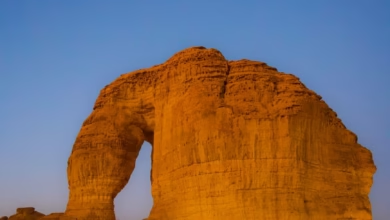
This approach gave Petra its unique character. The city feels less built and more revealed, as though the mountains themselves were shaped into architecture. The soft tones of the rock change with the light, turning the rose city landscape into a living canvas of pinks, reds, oranges, and golds.
The desert environment, though harsh, became part of Petra’s identity. Water channels, reservoirs, and dams allowed the city to support a thriving population in an otherwise difficult climate. This engineering brilliance was key to Petra’s success as a powerful trading hub.
The Nabataean Legacy
Petra was once the capital of the Nabataean Kingdom, a wealthy civilization that controlled important trade routes linking Arabia, Egypt, Syria, and the Mediterranean. Through this network, goods such as spices, incense, silk, and precious materials passed through the city.
The Nabataeans were not just merchants. They were also skilled builders, water managers, and artists. Their ability to create a prosperous city in the desert helped make Petra one of the most remarkable settlements of the ancient world.
Many of the ruins seen today reflect this sophisticated legacy:
- Elaborate tomb façades cut into cliff walls
- Ceremonial spaces and temples
- Carved inscriptions and decorative details
- Advanced water management systems
- Stairways and pathways connecting key areas of the site
Each feature tells a story of adaptation, ambition, and cultural exchange.
Walking Through the Ancient Ruins
Exploring Petra is a journey through layered history. Beyond the Treasury, travelers can continue along the Colonnaded Street, visit the Royal Tombs, and climb toward the Monastery, another massive rock-cut monument that rivals the Treasury in scale.
The experience is not only about famous landmarks. Smaller details often leave just as strong an impression. Weathered carvings, fallen stones, and silent chambers invite reflection on the passage of time. The ruins feel both grand and intimate, reminding visitors that this was once a living city.
The walk through Petra also reveals how nature and human creativity blend together. Sandstone cliffs frame every view, and shifting sunlight transforms the site throughout the day. Morning light brings soft shadows, while late afternoon casts a warm glow across the rocks.
Why Petra Still Captivates Visitors
Petra continues to inspire travelers, archaeologists, and historians because it offers more than visual beauty. It represents resilience, innovation, and cultural crossroads. Few places combine monumental architecture, desert scenery, and ancient mystery so powerfully.
The ancient sandstone ruins remain significant not only for what they look like, but for what they reveal about the people who built them. They show how a civilization can thrive through trade, adapt to a difficult environment, and leave behind a lasting artistic legacy.
For modern visitors, Petra is a place of wonder and perspective. It reminds us that some of history’s greatest achievements are carved not in books, but in stone.
A Timeless Landscape of History
Petra endures as one of the world’s most extraordinary destinations. Its iconic façade, hidden pathways, and sprawling ruins create an experience that is both dramatic and deeply moving. The rose city landscape adds another layer of beauty, turning every corner into a scene of color and texture.
Whether viewed as an archaeological site, a wonder of engineering, or a masterpiece of stone carving, Petra remains unforgettable. The Petra Jordan treasury facade may be its most famous image, but the true magic of Petra lies in the entire ancient city surrounding it—silent, weathered, and still full of life through history.