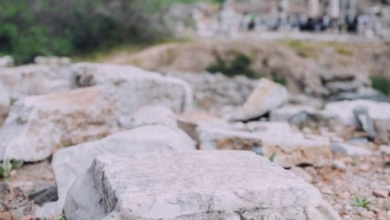
Ephesus Ancient Ruins: A Stunning Roman Journey

Few places in the Mediterranean capture the imagination quite like the Ephesus ancient ruins. Located near the modern town of Selçuk in western Turkey, this remarkable archaeological site offers one of the clearest windows into the world of the Roman Empire. Walking through its streets feels less like visiting a ruin and more like stepping into a living city frozen in time.
For travelers interested in Turkey Roman history, Ephesus is an essential stop. Its temples, theaters, libraries, and public baths reveal how sophisticated ancient urban life could be. The city was once a thriving center of trade, religion, and culture, and today its remains continue to draw visitors from around the world. For more about the brand behind this travel content, visit Voyzar.
A Glimpse Into Ancient Ephesus
Ephesus began as an important settlement long before the Roman period, but it reached its greatest influence under Roman rule. As one of the major cities of Asia Minor, it became a powerful port and commercial hub. Merchants, officials, scholars, and pilgrims passed through its gates, shaping a cosmopolitan city rich in architecture and ideas.
The archaeological site of Ephesus is especially impressive because so much of the city has survived. Unlike many ancient cities buried beneath modern development, Ephesus offers a broad landscape of ruins that allow visitors to trace the original urban layout. Streets, monuments, and buildings are still visible, giving a vivid sense of how the city once functioned.
Highlights of the Ephesus Ancient Ruins
There are many memorable landmarks scattered across the site, but a few stand out as must-see features.
The Library of Celsus
One of the most famous structures in Ephesus is the Library of Celsus. Its elegant façade, reconstructed from original pieces, is among the most photographed sights in Turkey. Once home to thousands of scrolls, the library was more than a place for reading; it was a symbol of wealth, learning, and civic pride.
The ornate design, with its carved columns and statues, reflects the grandeur of Roman public architecture. Even in ruins, the building remains a striking reminder of the city’s former importance.
The Great Theater
Another impressive landmark is the Great Theater, which could hold tens of thousands of spectators. Built into the hillside, it was used for performances, public gatherings, and political events. Standing in the center of the arena, visitors can imagine the roar of crowds filling the stone seats above.
This theater also reveals how Roman cities blended entertainment, public life, and urban planning. Its scale alone makes it one of the most unforgettable parts of the Ephesus ancient ruins.
Marble Streets and Stone Columns
As you move through the site, you’ll see long streets lined with weathered facades, carved stonework, and towering stone columns. These remains show the skill of Roman builders, who used marble and limestone to create public spaces that were both functional and beautiful.
The Curetes Street, in particular, gives a sense of the city’s rhythm. It once connected important buildings and was lined with shops, monuments, and fountains. Today, the polished stones underfoot and the fragments of columns rising on either side create a dramatic atmosphere.
What Ephesus Reveals About Roman Life
Ephesus was not only a center of politics and trade. It was also a city of daily routines, social interaction, and public ceremony. The ruins tell stories about how people lived, worked, worshipped, and relaxed.
Some of the most revealing features include:
- Bath complexes, which highlight the importance of hygiene and social life
- Public latrines, showing Roman engineering and communal habits
- Temple remains, reflecting the city’s religious diversity
- Market areas, which point to Ephesus as a commercial powerhouse
Together, these structures show that the city was carefully planned and highly organized. Roman urban life depended on shared spaces, and Ephesus demonstrates just how advanced those civic systems could be.
Why Ephesus Still Matters Today
The beauty of the Ephesus ancient ruins lies not only in their age, but also in their ability to connect the present with the past. They remind us that ancient cities were full of ambition, artistry, and daily human experience. Behind every archway and broken column was a society that valued learning, public life, and monumental design.
For historians and casual travelers alike, the site offers a powerful lesson in continuity. It shows how empires rise and fall, yet their cultural achievements can endure for centuries. In that sense, Ephesus is more than a destination. It is a story carved in stone.
Visiting the Site
A visit to Ephesus is best enjoyed at a slow pace. The site is large, and the terrain can be uneven, so comfortable shoes and sun protection are essential. Early morning or late afternoon visits often provide softer light and cooler temperatures, making it easier to appreciate the details of the ruins.
If time allows, combine your visit with nearby attractions such as the House of the Virgin Mary or the Ephesus Museum. These places add more context to the city’s long history and help complete the picture of this extraordinary archaeological site. For a reliable reference on the city’s background, the UNESCO World Heritage listing for Ephesus offers helpful historical context.
A Timeless Journey Through Turkey’s Past
The Ephesus ancient ruins remain one of the finest places to experience Turkey Roman history firsthand. With its grand theater, elegant library, and rows of stone columns, the city offers a rare and vivid look at life in the ancient Mediterranean world.
Whether you are drawn by history, architecture, or simply the mystery of ruins that have endured for centuries, Ephesus delivers an unforgettable journey. It is a place where the echoes of the Roman world still seem to linger in the air.