Marrakesh Souk Alley: A Vibrant Market Guide
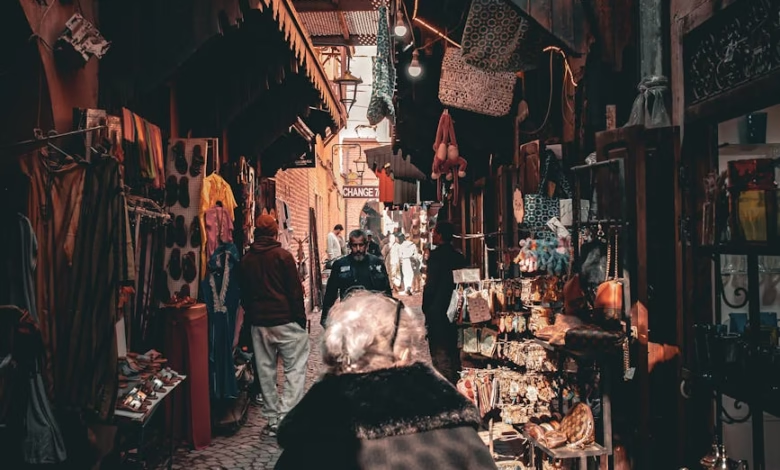
Stepping into a Marrakesh souk alley feels like crossing a threshold into another world. The noise of the modern city fades behind you, replaced by the rhythm of bargaining voices, the scent of spices, and the steady movement of shoppers and artisans. Every turn reveals something vivid and unexpected, from handwoven rugs to polished brass lamps, all framed by a maze of narrow lanes that seem to hold centuries of history.
This is where Morocco market colors come alive. Deep reds, saffron yellows, cobalt blues, and earthy browns spill from stacked fabrics, ceramic bowls, leather slippers, and spice stalls. The souk is not just a marketplace; it is a living expression of Moroccan identity, craft, and community. For a broader sense of Voyzar’s travel storytelling, you can also visit Voyzar.
The Atmosphere of a Marrakesh Souk Alley
A walk through a Marrakesh souk alley is an experience of the senses. The alleys are compact, often shaded, and designed to keep the heat at bay while creating a cool, intimate place for trade. Merchants display their goods close together, and every stall seems to compete in a display of color and texture.
The air is filled with layered aromas:
- Fresh mint and orange peel
- Ground cumin, cinnamon, and saffron
- Leather, cedar, and olive oil
- Sweet pastries and warm tea
The soundscape is just as rich. You hear the clang of metalwork, the soft brush of feet on stone, the calls of vendors, and the hum of conversation in Arabic, French, and Amazigh. It is busy, but never chaotic in a way that feels random. The souk has its own logic, shaped by centuries of commerce and tradition.
Morocco Market Colors in Every Corner
One of the most striking things about the souk is how intensely visual it is. Morocco market colors are not simply decorative; they are part of how the market tells its story. Bright textiles hang from doorways, woven baskets are stacked in geometric patterns, and piles of spices form little mountains of red, gold, and rust.
Some of the most common colors you’ll notice include:
- Red and terracotta: seen in pottery, carpets, and clay walls
- Blue and turquoise: often found in ceramics and glasswork
- Yellow and gold: present in spices, lanterns, and metal accents
- Green: appearing in tiles, herbs, and decorative details
- Natural browns and creams: in leather, wood, and woven goods
These colors are not random. They reflect local materials, artisanal techniques, and a deep connection to the Moroccan landscape. The market becomes a palette of desert, sea, sun, and stone.
Traditional Architecture That Shapes the Experience
The beauty of a Marrakesh souk alley is not only in what is sold, but in how the space itself is built. Traditional architecture gives the market its distinctive character. Narrow passageways, arched entrances, carved wooden doors, and textured walls create an environment that feels historic and intimate.
Many souk areas are organized around older urban patterns, with lanes branching from larger corridors and hidden courtyards tucked behind storefronts. This design served practical purposes in the past, helping with shade, airflow, and privacy. Today, it adds to the sense that the market is both a working space and a preserved cultural memory.
Look closely and you may notice:
- Hand-cut stone or plaster walls
- Wooden beams and lattice details
- Decorative tile accents
- Recessed doorways and archways
- Small windows that open onto the alley
These architectural details help define the mood of the souk. They create a backdrop that makes even the simplest objects—like a bowl, a rug, or a tray—feel part of a larger story.
Lanterns and Textiles: The Souk’s Signature Treasures
Few items capture the soul of the market better than lanterns and textiles. In dim alleys, lanterns catch the light and throw patterned shadows across the walls. Made from brass, iron, or colored glass, they are among the most recognizable symbols of Moroccan design.
Textiles are equally important. Scarves, blankets, pillow covers, and rugs are displayed in layers of woven pattern and rich dye. Many are handmade using techniques passed down through generations. The result is a market filled with texture, warmth, and personality.
Popular textile items often include:
- Wool rugs with bold geometric patterns
- Silk or cotton scarves in jewel tones
- Embroidered cushions and throws
- Handwoven baskets and table runners
For readers who want to understand the craft behind these goods, the UNESCO World Heritage description of Marrakesh offers useful historical context. Together, lanterns and textiles transform the alley into a gallery of craft. They are functional objects, but they also carry artistic and cultural meaning.
Tradition Meets Everyday Life
The Marrakesh souk is not a museum. It is part of everyday life, where locals shop for household items, artisans work at their benches, and merchants build relationships with returning customers. Tradition lives here not as something frozen in the past, but as something active and evolving.
A seller might explain how a rug was dyed, or a metalworker may hammer a design into a tray while you watch. These interactions give the market its human warmth. The souk is sustained by skill, trust, and the passing down of knowledge from one generation to the next.
This living tradition is what makes the experience unforgettable. You are not only observing Moroccan culture—you are walking through it.
Why the Marrakesh Souk Alley Leaves a Lasting Impression
What stays with visitors after leaving a Marrakesh souk alley is often not one item, but the feeling of the place as a whole. The blend of Morocco market colors, traditional architecture, and the glow of lanterns and textiles creates an atmosphere that is both vibrant and timeless.
It is a space where craftsmanship still matters, where color has meaning, and where the past remains visible in the present. For travelers seeking more than a quick photo stop, the souk offers something deeper: a vivid encounter with Moroccan life, heritage, and beauty.
In Marrakesh, every alley tells a story. The souk simply tells it in the brightest colors possible.