Iceland Waterfalls Guide: 7 Majestic Must-Sees
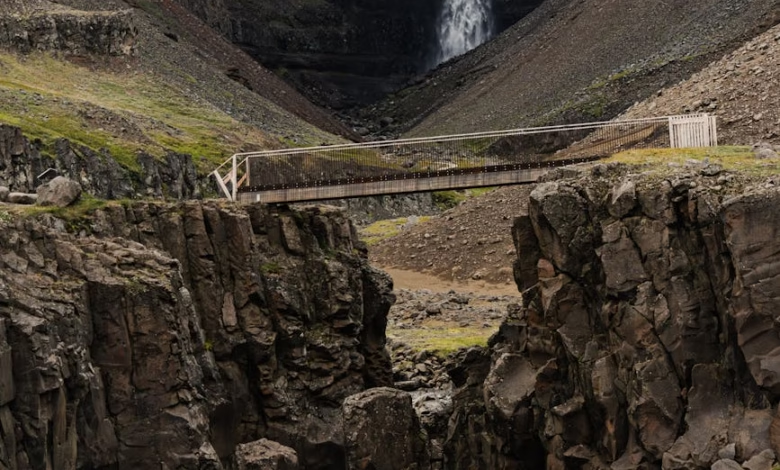
Iceland waterfalls offer some of the most unforgettable scenery in the world, where rushing water crashes over black rock and the volcanic landscape creates a truly dramatic backdrop. From misty canyons to towering cliffs, every view feels like a postcard from the wild north.
Few destinations on Earth deliver natural drama quite like Iceland waterfalls. In a single journey, you can watch glacial water tumble over black basalt edges, hear the roar echo through narrow canyons, and stand beneath mist rising from a scenic nature view that feels almost otherworldly. If you enjoy wild landscapes, you may also like Exploring New Zealand Fjords: A Scenic Nature Guide, which shares a similar sense of scale and beauty. Iceland’s waterfalls are not just beautiful landmarks; they are living expressions of the island’s powerful geology.
What makes them so unforgettable is the setting. Many fall beside lava fields, along rugged coastlines, or from towering rock walls shaped by ancient eruptions. The result is a landscape where water and fire seem to meet in one breathtaking frame.
Why Iceland’s Waterfalls Feel So Dramatic
Iceland’s terrain is unlike most places on the planet. Its volcanic landscape creates steep cliffs, jagged rock formations, and open valleys carved by glaciers and rivers. When waterfalls pour through these spaces, the scenery becomes instantly cinematic.
The contrast is striking:
- White water against black lava rock
- Bright green moss on dark stone
- Wide rivers dropping suddenly into narrow gorges
- Mist rising into cool northern air
These features give Iceland waterfalls their signature sense of grandeur. Even smaller falls can feel majestic because the surroundings are so raw and expansive.
The Most Famous Iceland Waterfalls
Gullfoss
Often called the “Golden Falls,” Gullfoss is one of Iceland’s best-known natural wonders. It plunges in two stages into a rugged canyon, sending spray into the wind and creating a powerful visual line through the valley. The steep rock walls around the falls make it a perfect example of dramatic cliffs meeting rushing water.
Skógafoss
Skógafoss is tall, wide, and thunderous. It drops from a high cliff in a clean sheet of water, often producing rainbows on sunny days. Visitors can admire it from below or climb the stairs beside it for a higher viewpoint. The surrounding scenery adds to its appeal, making it one of the most photogenic Iceland waterfalls.
Seljalandsfoss
Seljalandsfoss is famous for the path that lets visitors walk behind the curtain of water. From the rear viewpoint, the waterfall appears framed by a green wall of rock and open sky. It is a memorable example of how Iceland’s natural beauty invites exploration.
Dettifoss
Dettifoss is known for raw power. Considered one of the most forceful waterfalls in Europe, it crashes into a rocky canyon with immense energy. The area around it feels wild and untamed, perfectly capturing the spirit of Iceland’s volcanic landscape.
What Makes These Landscapes So Unique
Iceland’s waterfalls are shaped by the island’s active geology and dramatic climate. Glaciers melt into rivers, rain feeds the streams, and volcanic rock forms the platforms and cliffs where water falls. Over time, this creates deep channels, uneven ledges, and impressive drop-offs.
Key natural elements include:
- Volcanic rock: Dark basalt gives many falls their bold contrast.
- Glacial water: Cold, fast-moving water adds force and volume.
- Moss and lichens: Bright green growth softens the harsh stone.
- Open horizons: Wide skies make the views feel endless.
For more on the geology that shapes these views, see the National Geographic overview of Iceland’s volcanoes and glaciers. This combination is what turns a simple waterfall into a scene of unforgettable scale and beauty.
Best Ways to Experience Iceland Waterfalls
You do not need to be an expert hiker to enjoy Iceland’s waterfalls. Many are visible from easy-access viewing areas, while others reward those who are willing to walk a little farther.
Tips for a better visit:
- Visit early or late in the day for softer light and fewer crowds.
- Wear waterproof layers, since mist can be heavy near the falls.
- Stay on marked paths to protect the fragile terrain.
- Bring a camera with a wide-angle lens to capture the full scene.
- Take time to listen, not just look—the sound is part of the experience.
The weather can change quickly, so preparedness matters. Even on a clear day, a waterfall area may feel cool and windy. That is part of the appeal: the elements make the experience feel immersive and real.
Beyond the Water: The Scenic Nature View
The beauty of Iceland waterfalls extends far beyond the cascade itself. Around many falls, the land opens into mossy plains, lava fields, river valleys, and snow-dusted mountains. These surroundings help create a scenic nature view that feels peaceful and wild at the same time.
In summer, the long daylight highlights every detail in the landscape. In winter, snow and ice transform the falls into something quieter and more mystical. No matter the season, the setting remains striking because the island’s natural contrasts are so strong.
A Landscape That Stays With You
Travelers often remember Iceland not just for one waterfall, but for the overall feeling the country creates. The combination of Iceland waterfalls, black rock, bright moss, open skies, and dramatic cliffs leaves a lasting impression. It is a place where nature feels powerful without losing its elegance.
For anyone drawn to wild scenery, Iceland offers some of the most memorable views in the world. Its waterfalls are not merely sights to see; they are experiences that capture the energy of a living, changing land. Watching water fall through a volcanic landscape is a reminder of how beautiful the planet can be when nature is left to shape the scene.