Luxor Egypt Temples: A Timeless Nile Journey
Few places on earth capture the imagination quite like Luxor. Set along the banks of the Nile, this remarkable city is often described as the world’s greatest open-air museum. Here, Luxor Egypt temples rise from the desert in layered stone, while ancient ruins tell the story of kings, priests, builders, and everyday life from thousands of years ago. For travelers drawn to history, architecture, and atmosphere, Luxor offers an unforgettable journey through time.
If you enjoy travel stories that blend culture and history, you can also explore more on Voyzar.
A City Built on the Past
Luxor sits on the site of ancient Thebes, once the powerful capital of Egypt during the New Kingdom. Its temples and tombs were not built in isolation. They formed part of a vast spiritual and political landscape shaped by the Nile, the surrounding cliffs, and the movement of the sun.
What makes Luxor so compelling is how complete the historical setting still feels. The river continues to shape daily life, while the desert holds layers of buried civilization. In many places, the boundary between modern city and archaeological site feels almost invisible.
The Temple Complexes That Define Luxor
The most famous Luxor Egypt temples are monumental in scale and rich in symbolism. Two sites, in particular, stand out for first-time visitors and seasoned travelers alike.
Karnak Temple
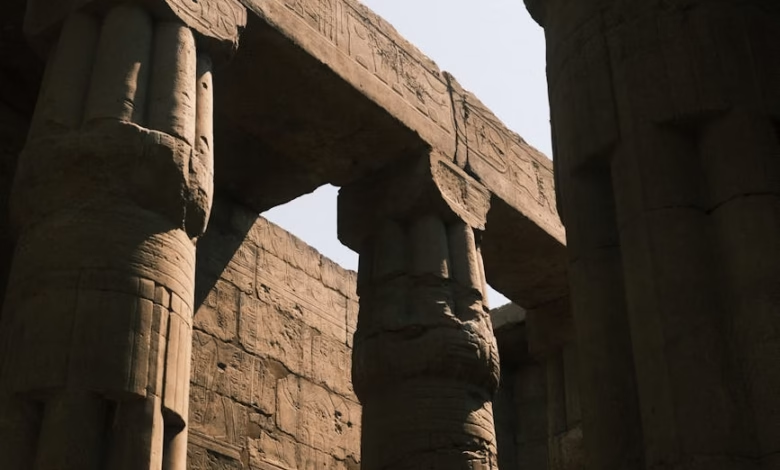
Karnak is one of the largest religious complexes ever built. Dedicated mainly to Amun-Ra, it grew over centuries through the additions of many pharaohs. Walking through Karnak is like moving through a stone record of ancient ambition.
Highlights include:
- The Great Hypostyle Hall, with its forest of massive columns
- Sacred lake and ceremonial processional routes
- Obelisks, statues, and carved reliefs
- Walls covered with hieroglyphs and royal scenes
The scale of Karnak is breathtaking, but its details are just as impressive. Every column and carving reflects the skill of ancient Egyptian artisans.
Luxor Temple
Located closer to the river, Luxor Temple is especially beautiful at sunset and after dark. Unlike many temples, it was not dedicated to a single pharaoh but to the divine renewal of kingship. Its elegant layout makes it feel more intimate than Karnak, yet no less powerful.
One of the temple’s most striking features is the avenue of sphinxes that once linked it to Karnak. Even today, the remaining statues hint at the grand ceremonial processions that once moved between the two temples.
Ancient Ruins Beyond the Temples
Luxor is not only about temple complexes. The surrounding area is filled with ancient ruins that reveal the city’s broader role in Egyptian history. Across the west bank, tombs, mortuary temples, and village remains preserve the memory of the people who built and served this extraordinary religious center.
The Valley of the Kings
Perhaps the most famous burial site in Egypt, the Valley of the Kings contains the tombs of rulers such as Tutankhamun, Seti I, and Ramses VI. Though hidden in a barren valley, these tombs are richly decorated with texts and images meant to guide the dead into the afterlife.
The experience of descending into these chambers is unforgettable. The colors, symbols, and architecture still feel alive, even after thousands of years. For official visitor information, the Egyptian Ministry of Tourism and Antiquities is a useful reference.
Hatshepsut’s Mortuary Temple
Carved into the cliffs at Deir el-Bahari, the mortuary temple of Hatshepsut is a masterpiece of symmetry and design. Its terraces and colonnades blend into the surrounding landscape, creating one of the most elegant ruins in Egypt.
This site also reflects the power of one of Egypt’s most successful female pharaohs. Her temple stands as both a memorial and a statement of authority.
Medinet Habu and the Ramesseum
For visitors who want to explore beyond the best-known landmarks, Medinet Habu and the Ramesseum offer quieter but equally fascinating encounters with history. These sites feature towering gateways, damaged reliefs, and impressive remains of ceremonial halls. Their worn surfaces and broken walls add to the sense of discovery.
The Beauty of Archaeological Columns
One of the most distinctive visual elements in Luxor is the presence of archaeological columns. These columns appear in temple halls, courtyards, and ruined sanctuaries across the region, often decorated with lotus, papyrus, or palm motifs.
They are more than structural supports. In Egyptian architecture, columns were symbolic as well as functional, evoking sacred landscapes and the life-giving force of the Nile. In places like Karnak, their scale can feel almost overwhelming. In smaller ruins, their remaining shafts and capitals create a haunting elegance, especially when light and shadow move across the stone.
The Nile Heritage Landscape
Luxor’s power comes not only from its monuments but from its setting within the Nile heritage landscape. The river has always been the lifeline of Egyptian civilization, shaping agriculture, travel, religion, and settlement. In Luxor, the contrast between fertile green riverbanks and the dry cliffs beyond helps explain why ancient Egyptians chose this region for temples and tombs.
The east bank, associated with life and the rising sun, holds the great temple complexes. The west bank, linked to the setting sun and the realm of the dead, contains tombs and mortuary temples. This natural division gave the city a spiritual geography that still feels deeply present today.
Why Luxor Still Matters
Visiting Luxor is not just about seeing ruins. It is about experiencing a place where history remains part of the landscape. The city offers a rare chance to move between monumental temples, hidden tombs, and riverside views without losing sight of the civilization that built them.
For anyone interested in ancient Egypt, Luxor is essential. Its Luxor Egypt temples, remarkable ancient ruins, enduring archaeological columns, and living Nile heritage landscape create one of the most powerful historical destinations in the world.
A Journey Through Time
Luxor invites visitors to slow down and look closely. A carved wall, a ruined hall, a colonnade catching the afternoon light—each detail adds another layer to the story. Whether you are standing beneath the towering columns of Karnak or gazing across the river to the west bank, you are looking at a landscape where history still breathes.
In Luxor, the ancient world does not feel distant. It feels present, monumental, and waiting to be explored.