Best Places to Visit in Makkah for Pilgrims
Makkah is the spiritual heart of Islam and one of the most visited cities in the world. For pilgrims, it is a place of devotion, reflection, and deep historical meaning. Beyond the rituals of Hajj and Umrah, the city also offers many meaningful ziyarat landmarks that connect visitors to the life of the Prophet Muhammad (PBUH), the early Muslims, and the rich legacy of Makkah Islamic heritage.
Whether you are visiting for worship or exploring the city’s sacred history, these are some of the best places to visit in Makkah. For more about the journey and services that support it, you can also visit Voyzar.
Masjid al-Haram: The Heart of Makkah
No visit to Makkah is complete without spending time at Masjid al-Haram, the holiest mosque in Islam. It surrounds the Kaaba, the direction Muslims face in prayer from all over the world.
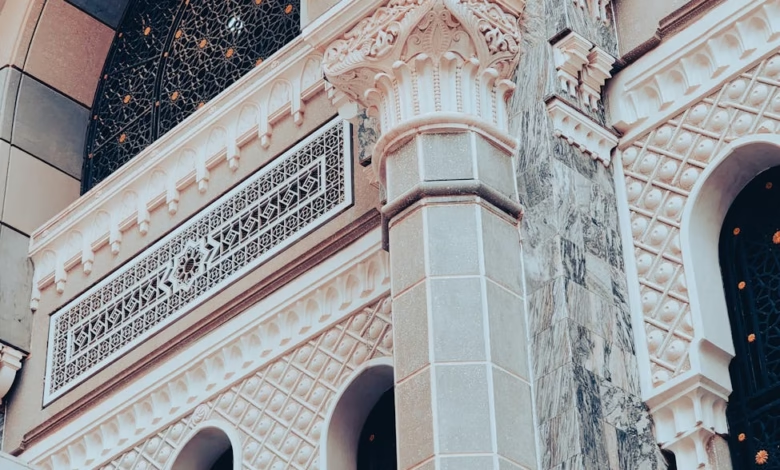
The mosque is not only spiritually powerful but also an architectural masterpiece. Its scale, lighting, and open courtyards create a sense of awe for every visitor. The mosque exterior is especially impressive at night, when the minarets and white marble glow under the city lights.
Why it matters
– The spiritual center of Muslim prayer
– Home to the Kaaba and the Black Stone
– A place for tawaf, prayer, and reflection
Jabal al-Nour: The Mountain of Revelation
Jabal al-Nour, or the Mountain of Light, is one of the most famous ziyarat landmarks in Makkah. It is known as the site of the Cave of Hira, where the first revelation of the Qur’an was received by Prophet Muhammad (PBUH).
Climbing the mountain is not easy, but many pilgrims visit to feel connected to the moment that changed Islamic history. The journey offers a powerful reminder of patience, faith, and the beginnings of prophethood. For background on the sacred geography of the city, readers may also find the IslamicFinder reference guide helpful.
What visitors experience
– A historic climb with deep spiritual meaning
– Views of Makkah from above
– A chance to reflect on the first revelation
Jabal Thawr: A Symbol of Protection and Trust
Jabal Thawr is another important site for those interested in Makkah Islamic heritage. It is the mountain where the Prophet Muhammad (PBUH) and Abu Bakr (RA) took refuge in the Cave of Thawr during the migration to Madinah.
This site represents trust in Allah during times of danger. While the climb is more challenging, it remains a meaningful stop for pilgrims who want to connect with the early history of Islam.
Why pilgrims visit
– It is tied to the Hijrah journey
– It highlights faith under pressure
– It is one of the most respected historical sites in Makkah
Makkah Museum: A Look Into the City’s Past
For visitors who want to explore Makkah’s historical and cultural side, the Makkah Museum is worth a visit. It offers insight into the city’s development, traditional life, and Islamic history.
The museum helps pilgrims understand how Makkah evolved from an ancient desert settlement into the holy city known today. Exhibits often include artifacts, manuscripts, and displays related to the region’s heritage.
Good for
– Learning about the city’s past
– Understanding Islamic history in a broader context
– Families and visitors with limited time for outdoor ziyarat
Mina, Arafat, and Muzdalifah: Sacred Hajj Sites
These three locations are central to the Hajj pilgrimage and carry great importance for Muslims who visit Makkah during the season.
Mina
Mina is known for the symbolic stoning of the pillars during Hajj. It is a place associated with submission, sacrifice, and obedience to Allah.
Arafat
The plain of Arafat is one of the most sacred places in Islam. Standing there during Hajj is essential, and the Day of Arafah is considered one of the most important days in the Islamic calendar.
Muzdalifah
This open plain is where pilgrims gather after Arafat to pray and rest before continuing the Hajj journey. It reflects simplicity and unity.
These sites may not always be visited as sightseeing stops, but they remain among the most significant landmarks in the city.
Masjid Aisha (Masjid at-Tan’im)
Masjid Aisha is an important site for pilgrims, especially those staying in Makkah who wish to enter ihram for Umrah. It is also one of the most commonly visited mosques outside the main sacred precinct.
The mosque is simple yet well maintained, and its role in pilgrimage makes it a practical and meaningful stop. It is often included in local ziyarat routes because of its connection to the rites of Umrah.
Historic Cemeteries and Early Islamic Memory
Some visitors also choose to pay respects at historic burial sites such as Jannat al-Mu’alla, where several family members of the Prophet Muhammad (PBUH) and other early Muslims are remembered. These sites are visited quietly and respectfully, with a focus on prayer and reflection rather than sightseeing.
They form an important part of the city’s spiritual memory and offer a deeper understanding of Makkah Islamic heritage.
Tips for Visiting Ziyarat Landmarks in Makkah
If you plan to explore these sacred places, a thoughtful approach makes the journey more rewarding.
– Dress modestly and comfortably
– Respect local customs and quiet prayer spaces
– Plan visits around prayer times and crowd levels
– Focus on reflection, not just photography
– Use a reliable guide if you want historical context
A City of Faith and History
Makkah is more than a destination; it is a place where faith, memory, and history come together. From the grand holy city architecture of Masjid al-Haram to the quiet significance of hillside caves and sacred plains, every site tells a story.
For pilgrims and visitors alike, the best places to visit in Makkah are those that deepen spiritual understanding and strengthen the connection to Islam’s earliest moments. Whether you are admiring a beautiful mosque exterior or standing at a historic ziyarat landmark, Makkah leaves every heart with something unforgettable.